
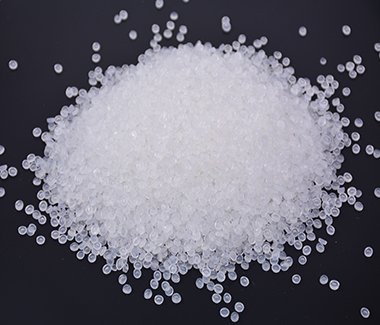
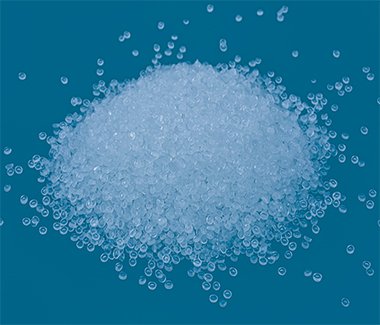

Description
Properties of PE
Mechanical: Polyethylene is of low strength, hardness and rigidity, but has a high ductility and impact strength as well as low friction.
Thermal: The commercial applicability of polyethylene is limited by its low melting point compared to other thermoplastics. For common commercial grades of medium- and high-density polyethylene the melting point is typically in the range 120 to 130 °C (248 to 266 °F). The melting point for average commercial low-density polyethylene is typically 105 to 115 °C (221 to 239 °F). These temperatures vary strongly with the type of polyethylene, but the theoretical upper limit of melting of polyethylene is reported to be 144 to 146 °C (291 to 295 °F).
Chemical: Polyethylene consists of nonpolar, saturated, high-molecular-weight hydrocarbons. Therefore, its chemical behavior is similar to paraffin.
The individual macromolecules are not covalently linked. Because of their symmetric molecular structure, they tend to crystallize; overall polyethylene is partially crystalline. Higher crystallinity increases density and mechanical and chemical stability.
Most LDPE, MDPE, and HDPE grades have excellent chemical resistance, meaning that they are not attacked by strong acids or strong bases and are resistant to gentle oxidants and reducing agents.
Polyethylene absorbs almost no water. The gas and water vapour permeability (only polar gases) is lower than for most plastics; oxygen, carbon dioxide and flavorings, on the other hand, can pass it easily.PE can become brittle when exposed to sunlight, carbon black is usually used as a UV stabilizer.
Polyethylene cannot be imprinted or bonded with adhesives without pretreatment. High-strength joints are readily achieved with plastic welding.
Electrical: Polyethylene is a good electrical insulator. It offers good electrical treeing resistance; however, it becomes easily electrostatically charged (which can be reduced by additions of graphite, carbon black or antistatic agents).
Optical: Depending on thermal history and film thickness, PE can vary between almost clear (transparent), milky-opaque (translucent) and opaque. LDPE has the greatest, LLDPE slightly less, and HDPE the least transparency. Transparency is reduced by crystallites if they are larger than the wavelength of visible light.
Classfication of PE:
Polyethylene is classified by its density and branching. Its mechanical properties depend significantly on variables such as the extent and type of branching, the crystal structure, and the molecular weight. There are several types of polyethylene:
Ultra-high-molecular-weight polyethylene (UHMWPE)
Ultra-low-molecular-weight polyethylene (ULMWPE or PE-WAX)
High-molecular-weight polyethylene (HMWPE)
High-density polyethylene (HDPE)
High-density cross-linked polyethylene (HDXLPE)
Cross-linked polyethylene (PEX or XLPE)
Medium-density polyethylene (MDPE)
Linear low-density polyethylene (LLDPE)
Low-density polyethylene (LDPE)
Very-low-density polyethylene (VLDPE)
Chlorinated polyethylene (CPE)
With regard to sold volumes, the most important polyethylene grades are HDPE, LLDPE, and LDPE.
Reviews
There are no reviews yet.